And yes, another consultant reference card. As I wrote previously. we sometimes overuse our consultants and call then at inappropriate times. So what if we diagnose an injury in their area of expertise at 2 am? Does it need attention or an operation before morning? If not, why call at that ungodly hour?
Let’s use our consultants wisely! I’ve listed most of the common eye diagnoses that trauma professionals will encounter. There is also an indication of what you need to do, and exactly when to call your consultant.
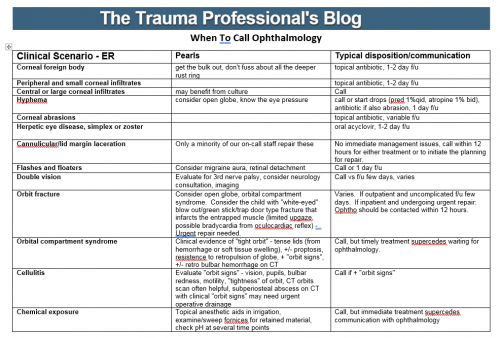
Unfortunately, this one won’t fit on a 3×5 index card that you can keep in your pocket. I’ve included a printable pdf file, as well as the original Microsoft Word file in case you want to make a few modifications to suit your own hospital.
Enjoy!
When to call Ophthalmology reference card (pdf)
When to call Ophthalmology MS Wordfile (docx)
Here’s another in my series of “When To Call” pieces. We sometimes overuse our consultants and call then at inappropriate times. So what if we diagnose an injury in their area of expertise at 2 am? Does it need attention or an operation before morning? If not, why call at that ungodly hour?
Let’s use our consultants wisely! I’ve listed most of the common eye diagnoses that trauma professionals will encounter. There is also an indication of what you need to do, and exactly when to call your consultant.
Unfortunately, this one won’t fit on a 3×5 index card that you can keep in your pocket. I’ve included a printable pdf file, as well as the original Microsoft Word file in case you want to make a few modifications to suit your own hospital.
In my next post, I’ll provide a comprehensive reference for when to call your orthopedic surgeon.
Here’s another in my series of “When To Call” pieces. We sometimes overuse our consultants and call then at inappropriate times. So what if we diagnose an injury in their area of expertise at 2 am? Does it need attention or an operation before morning? If not, why call at that ungodly hour?
Let’s use our consultants wisely! I’ve listed most of the common eye diagnoses that trauma professionals will encounter. There is also an indication of what you need to do, and exactly when to call your consultant.
Unfortunately, this one won’t fit on a 3×5 index card that you can keep in your pocket. I’ve included a printable pdf file, as well as the original Microsoft Word file in case you want to make a few modifications to suit your own hospital.
Enjoy!
When to call Ophthalmology reference card (pdf)
When to call Ophthalmology MS Wordfile (docx)
Home of the Trauma Professional's Blog
